

Cyberattacks with Real-World Consequences
In October 2026, several hundred supermarkets in France were affected by cyberattacks targeting their refrigeration control systems. The attackers remotely accessed certain connected devices and altered their operating settings, causing temperatures to rise abnormally. Fresh and frozen products had to be discarded, resulting in significant financial losses. Read Le Monde’s coverage of the cyberattacks targeting refrigeration systems.
In Luxembourg, the Delhaize group also experienced a cybersecurity incident in October 2026. The disruption of certain IT systems affected some operations and product availability. Read L’essentiel’s report on the IT incident at Delhaize Luxembourg.
These two incidents are separate, and there is no evidence to suggest that they are connected. However, they highlight the same reality: a cyberattack can have operational and financial consequences that extend far beyond the IT systems directly affected.
What Are the Main Cyber Threats Facing Businesses?
All organisations, regardless of their size or industry, can be exposed to cyberattacks. Several common threats deserve particular attention.
Phishing: Exploiting the Human Factor
Cybercriminals use fraudulent emails, text messages and websites to trick victims into disclosing confidential information, sharing their login credentials or downloading malicious files. A single compromised account can sometimes be enough to pave the way for a much larger attack.
Ransomware: Bringing Business Operations to a Standstill
Ransomware can encrypt data and make systems inaccessible. Attackers then demand a ransom in exchange for a potential decryption key. Even when backups are available, restoring systems can take time and significantly disrupt business operations.
Vulnerabilities in Systems and Connected Devices
Outdated software, misconfigured devices and inadequately protected administration interfaces can provide attackers with an entry point. As the attacks targeting refrigeration systems illustrate, cybersecurity risks also extend to physical equipment connected to the network.
The security of these devices must be considered from the design stage and throughout their integration into the network (security by design). This includes segmenting environments, restricting administrative access and controlling communications between systems.
Compromised Access and Indirect Attacks
Reused passwords, poorly secured remote access or a vulnerability at a service provider can allow cybercriminals to infiltrate an IT environment. A business can therefore be affected even when it was not the original target of the attack.
The potential consequences are numerous: service disruptions, financial losses, unavailable data, reputational damage and interruptions to the supply chain.
Ces mesures doivent s’inscrire dans une démarche continue : les menaces évoluent, les infrastructures changent et les protections doivent être régulièrement réévaluées.
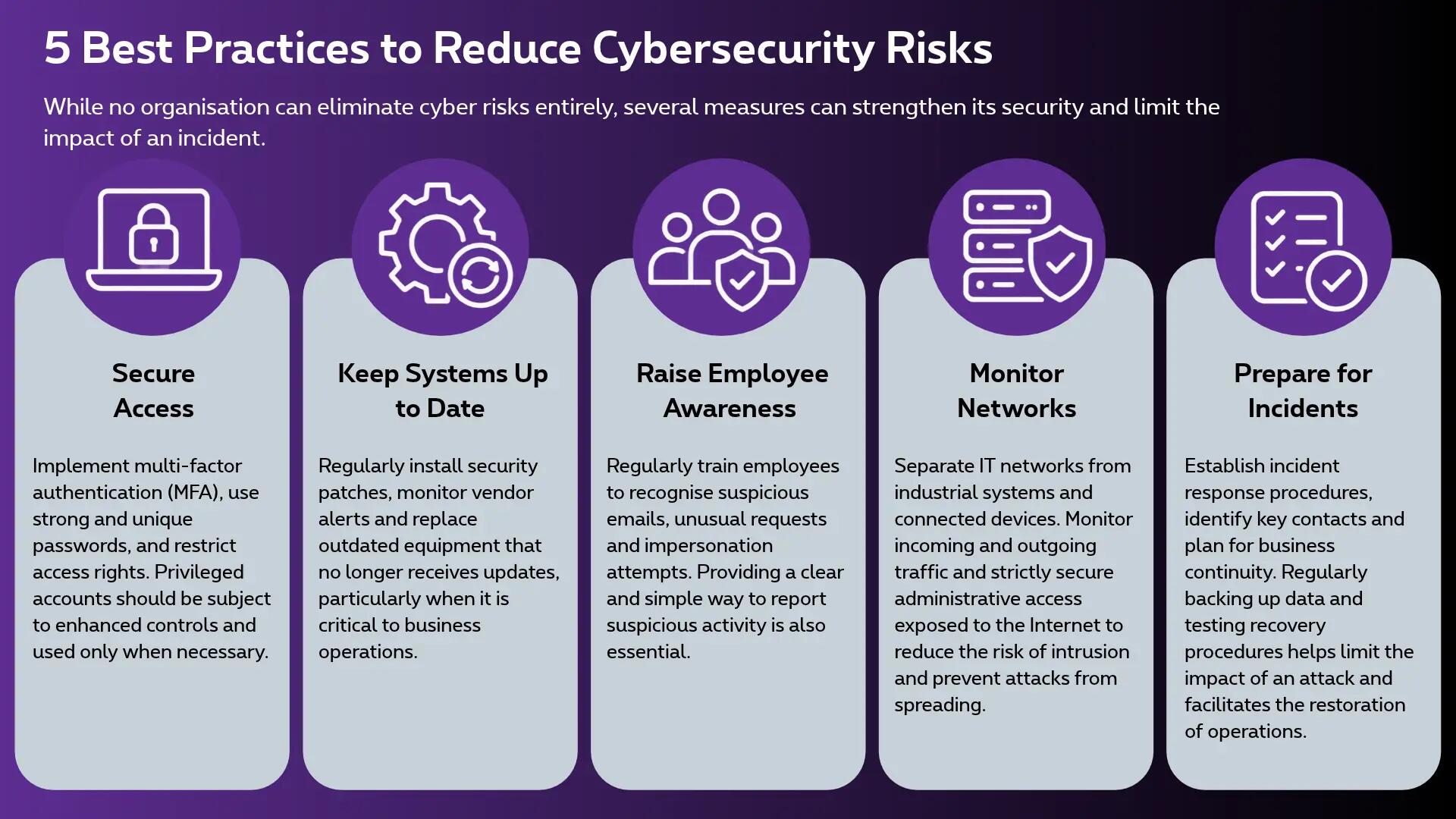
These measures must be part of an ongoing process. Threats evolve, infrastructures change and security measures must be regularly reassessed.
How Can Businesses Strengthen Their Cybersecurity?
Implementing an effective cybersecurity strategy involves more than simply installing security tools. Organisations need to understand their specific risks, identify their most critical vulnerabilities and ensure that the measures in place genuinely address their operational needs.
Proximus NXT Luxembourg supports businesses in securing their digital environments, taking into account their infrastructures, business challenges and cybersecurity maturity levels.
Depending on the needs identified, this support may include:
- Risk and vulnerability assessments, to gain a clearer understanding of exposure points and establish priorities.
- Infrastructure and network security, to strengthen access controls and limit the spread of an attack.
- Threat detection and monitoring, to identify suspicious activity more quickly.
- Incident preparedness and response, to improve reaction capabilities and support a controlled recovery of business operations.
The approach must be tailored to each organisation. The needs of an industrial company may differ significantly from those of a service provider or a retailer.
Take Action to Better Protect Your Business
Recent incidents in the retail sector are a reminder that cybersecurity has become a major operational concern. IT systems, networks, connected devices and production tools are now closely interconnected. As a result, a vulnerability can have very real consequences for an organisation's day-to-day operations.
Businesses face a twofold challenge: reducing the likelihood of an attack and preparing to respond quickly when an incident occurs.
Would you like to assess the risks facing your organisation and identify the measures needed to address them? Proximus NXT Luxembourg can support you in evaluating your cybersecurity needs and strengthening your overall security strategy.
